
Flooring guide
LVP vs. Tile for South Florida Homes
Luxury vinyl plank or porcelain tile? Compare cost, comfort, water resistance, condo rules and lifespan for South Florida homes.
5 min read · Updated September 2026
The Short Answer
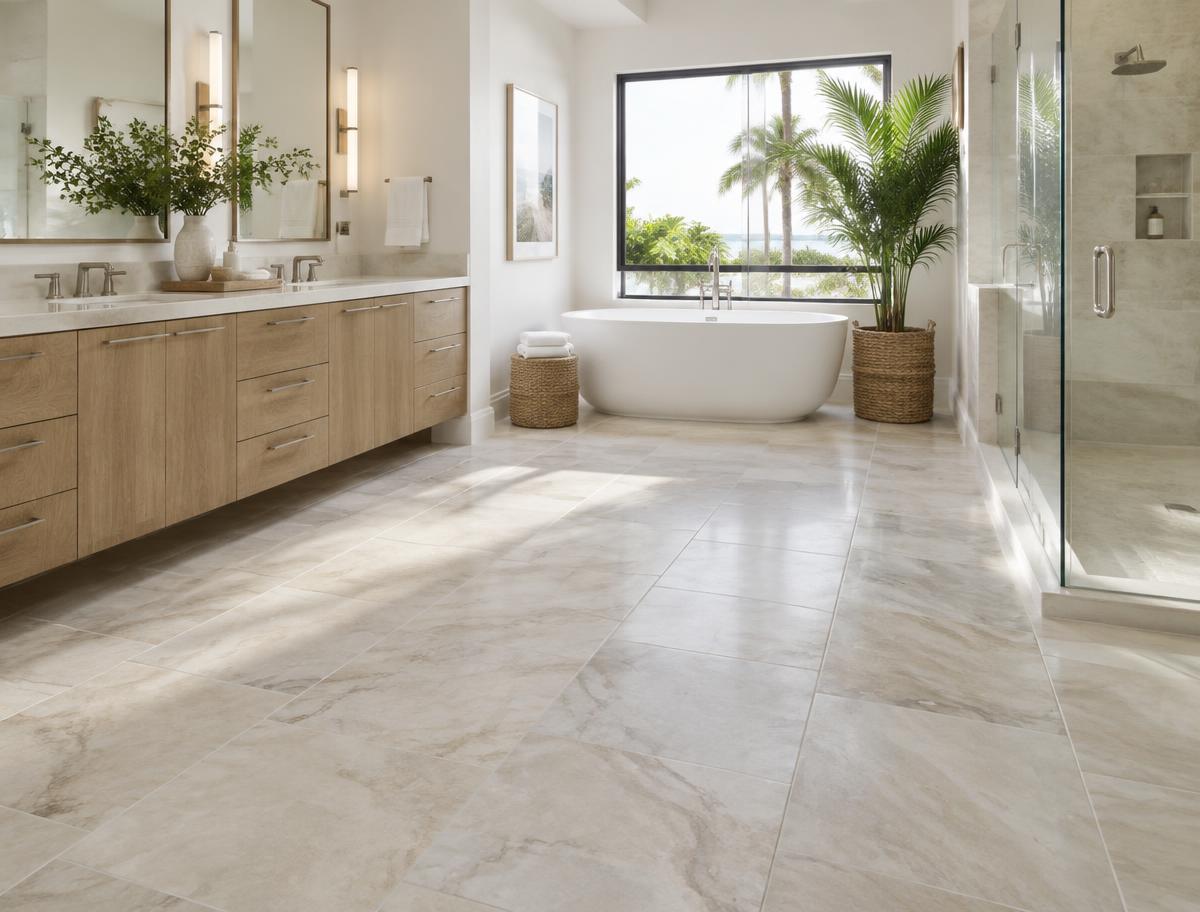
Both luxury vinyl plank (LVP) and porcelain tile are excellent choices for South Florida. Both handle water, humidity and sand far better than laminate, carpet or solid hardwood. The right pick depends on where the floor is going, how you want it to feel underfoot, and whether you live in a condo with sound rules.
As a rule of thumb: choose tile when you want the longest possible lifespan and a cool, solid floor. Choose LVP when you want a warm, quiet wood look that installs fast and costs less.
Water and Humidity
Porcelain tile is completely unaffected by water. It can sit under a leaking fridge or a wet pool towel and nothing happens to the tile itself. The weak point is grout, which needs to be sealed and kept clean.
Most quality LVP today is 100% waterproof, meaning the planks won’t swell or warp when wet. Water can still get under the floor if there is a major leak, so in kitchens and laundry rooms we pay attention to perimeter sealing and transitions. On ground-floor slabs we also test for moisture from below and install the right barrier.
Comfort, Sound and Feel
Tile is hard and cool. In a Florida summer, many people love that. It’s also loud with hard shoes and unforgiving when a glass drops.
LVP has a slight give and feels warmer underfoot. With an attached pad or a separate acoustic underlayment, it’s much quieter than tile, which matters in condos and upstairs rooms.
Condos and Sound Ratings
Florida Building Code requires floor/ceiling assemblies between units to reach STC 50 and IIC 50, or 45 when field-tested; many South Florida associations require more for any new hard floor. Both LVP and tile can meet these rules, but tile needs a sound-rated membrane underneath, which adds cost and height.
LVP with a rated underlayment is usually the simplest path to board approval. We prepare the product specs and paperwork your association asks for.
Cost and Install Time
Installed, LVP usually costs less than porcelain tile. Tile takes more labor: cutting, setting, leveling and grouting, plus cure time. A typical LVP room can be done in a day; the same room in tile may take two or three.
Removal and slab prep are the same for both. If you’re replacing old tile, expect grinding or leveling so the new floor sits flat.
- LVP installed: $4–$8 standard; $6–$15 premium per sq ft
- Porcelain tile installed: $6–$15 per sq ft; $20+ for large-format or natural stone
- Removal: about $1.50–$4.50 per sq ft; carpet $1.50–$2.50 and tile $4–$4.50
Lifespan and Resale
Quality porcelain can last 50 years or more. It’s a floor you install once. Buyers in South Florida see good tile as a premium finish.
LVP typically lasts 15–25 years depending on wear layer. It’s easy to repair plank by plank, and a well-chosen wood look also reads as an upgrade to buyers.
Our Recommendation
Kitchens, baths, lanais and whole homes where you plan to stay long-term: porcelain tile. Condos, bedrooms, family rooms, rentals and homes where you want a warm wood look fast: luxury vinyl plank.
Many of our customers do both, with tile in the wet areas and LVP in the living spaces. We’ll bring samples of each so you can see them in your own light.
Related floors: Luxury Vinyl Plank · Tile